Raccoon Rascal
Chase and Run | Third-person
Play as a mischievous raccoon stealing items while trying not to get caught.

Summary
Raccoon Rascol is a third-person chase and run game, where I worked on Gameplay, System and UI programming. I go into more detail on how the spawning system works and in game UI. I learned from this project how to work in a team in Unity, got better at communication in a team, learning how to manage stress when working and changing plans when getting feedback.
Project Info
Team Size: 15
Project Duration: 3 weeks
Engine: Unity
Roles: Gameplay/System/UI programmer
Other Tools: Perforce, Miro, Jira
Introduction
Raccoon Rascol is a third-person chase and run game where you play as a mischievous raccoon stealing items while trying not to get caught. When items are brought back to the raccoons stash, the player gets buffs, increasing movement speed and jump power. There are also power ups scattered around the map increasing the movement speed and jump power.
I worked on gameplay mechanics for example power ups and stash buffs. I also worked on systems like, item and power up spawners, shop system and money system. I did most of the in game Ui implementation and programming, connecting gameplay with the Ui.
Spawners
The game uses spawners for items and powerups that the player can collect, items gradually populating the level over time.
Items and powerups spawn location is predetermined by using gameobjects that only hold a transform, using them as points for the spawning system.
When an Item or powerup has populated a location others can't spawn on the same point until it has gotten removed, this makes it so there are two things on the same spawn point.
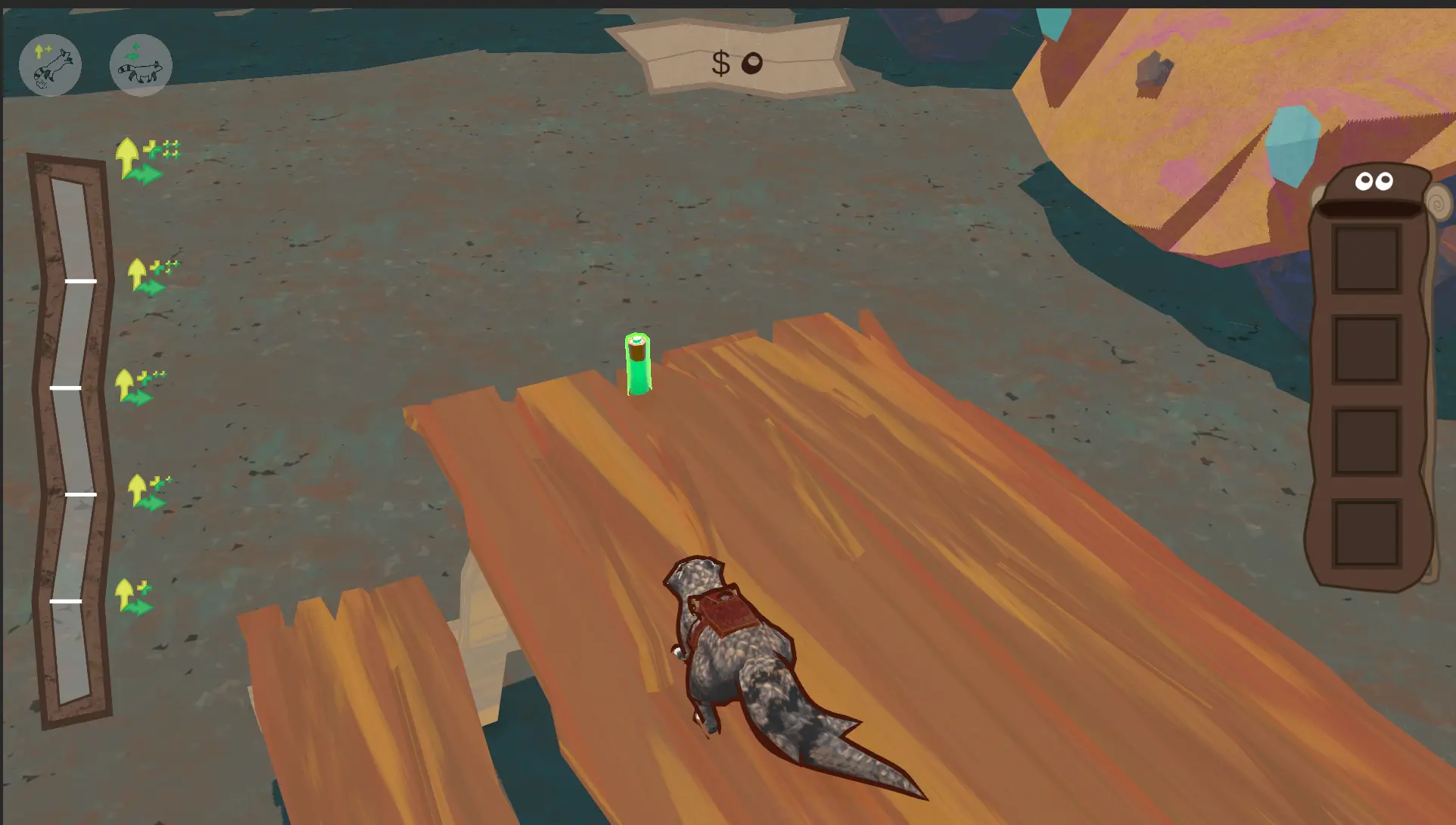
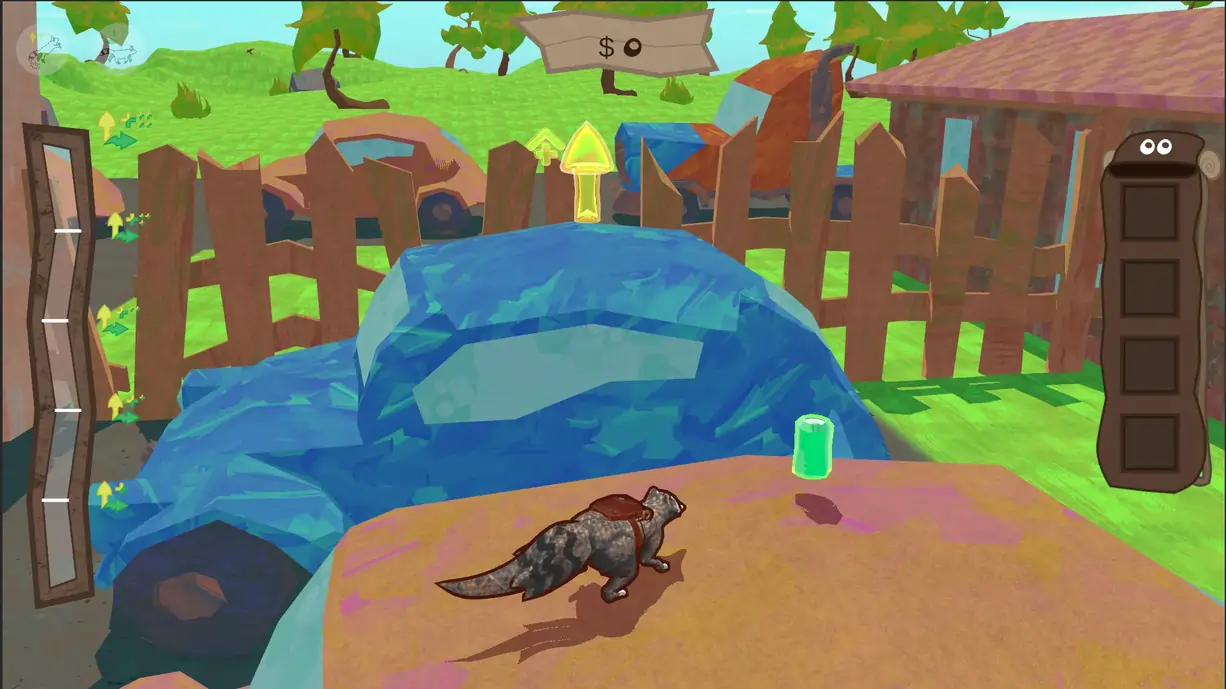
Power ups use an arrow and differences in color to make it easier to see what kind of power up it is. A yellow arrow pointing up is a jump buff and a green arrow pointing forward is a speed buff. These buffs last a couple of seconds.
Items have different colored outlines both in game and when in the inventory, to showcase different rarities, rarer items being worth more than more common ones.
using System.Collections;
using System.Collections.Generic;
using Unity.Properties;
using UnityEngine;
using UnityEngine.Video;

//Base Spawner

public class Spawner : MonoBehaviour
{
    public struct SpawnPoint
    {
        public Transform point;
        public bool isNotPlaceable;
    }
    [SerializeField] protected Transform spawnHolder;
    [SerializeField] protected List<Transform> initialSpawnPoints = new();

    [Header("Only use one rarity in the spawn list, or it may break!!!")]
    [SerializeField] protected List<GameObject> initialSpawnList = new();

    protected Dictionary<GameObject, Transform> spawnedItem = new();
    protected List<SpawnPoint> spawnPointList = new();

    [SerializeField] protected int maxAmountOfItems = 1;
    protected int itemsInScene = 0;

    [SerializeField] protected float amountToSpawnPerTick = 1;
    [SerializeField] protected float spawnTime = 5;
    protected float timer = 0;
    protected bool canSpawn = false;

    public bool IsSpawnerActive = false;

    public LootData.Rarity RarityLabel;

    private void Start()
    {
        if (initialSpawnPoints.Count == 0)
        {
            Debug.LogError(gameObject.name + ": Have no spawn points");
        }
        if (initialSpawnList.Count == 0)
        {
            Debug.LogError(gameObject.name + ": Have no item to spawn");
        }

        foreach (Transform item in initialSpawnPoints)
        {
            SpawnPoint tempSpawnPoint = new SpawnPoint();
            tempSpawnPoint.point = item;
            tempSpawnPoint.isNotPlaceable = false;
            spawnPointList.Add(tempSpawnPoint);
        }
    }

    protected void SpawnTimer()
    {
        if (timer > 0)
        {
            timer -= Time.deltaTime;
        }
        else
        {
            canSpawn = true;
        }
    }

    protected virtual void Spawn()
    {

    }

    protected virtual void SpawnItem(int index)
    {

        SpawnPoint tempSpawnPoint = spawnPointList[index];
        tempSpawnPoint.isNotPlaceable = true;
        GameObject tempObject = initialSpawnList[Random.Range(0, initialSpawnList.Count)];
        GameObject currentObject = Instantiate(tempObject, tempSpawnPoint.point.position, tempObject.transform.rotation, spawnHolder);
        itemsInScene++;
        spawnedItem.Add(currentObject, tempSpawnPoint.point);
        spawnPointList[index] = tempSpawnPoint;
    }

    public virtual bool RemoveItem(GameObject item)
    {
        if (!spawnedItem.ContainsKey(item))
        {
            return false;
        }
        SpawnPoint temp = new();
        int index = 0;
        foreach (SpawnPoint spawnPoint in spawnPointList)
        {
            if (spawnPoint.point == spawnedItem[item])
            {
                temp = spawnPoint;
                temp.isNotPlaceable = false;
                index = spawnPointList.IndexOf(spawnPoint);
            }
        }
        spawnPointList[index] = temp;

        itemsInScene--;
        spawnedItem.Remove(item);
        Destroy(item);
        return true;

    }

}

//Random Spawner

public class RandomSpawner : Spawner
{
    private void Update()
    {
        if (IsSpawnerActive && itemsInScene < maxAmountOfItems)
        {
            if (canSpawn)
            {
                Spawn();
                canSpawn = false;
                timer = spawnTime;
            }
            else
            {
                SpawnTimer();
            }
        }
    }

    protected override void Spawn()
    {
        int randomIndex = 0;
        for (int i = 0; i < amountToSpawnPerTick; i++)
        {
            bool runningRandomizer = true;
            int failedAttempt = 0;
            while (runningRandomizer)
            {
                if (Randomizer(ref randomIndex))
                {
                    SpawnItem(randomIndex);
                    runningRandomizer = false;
                }
                else
                {
                    failedAttempt++;
                    if (failedAttempt >= 10)
                    {
                        Debug.Log("failed to many times, break loop");
                        break;
                    }
                }
            }
        }
    }

    private bool Randomizer(ref int randomIndex)
    {
        randomIndex = Random.Range(0, spawnPointList.Count);
        return (!spawnPointList[randomIndex].isNotPlaceable);
    }
}
Gameplay Ui
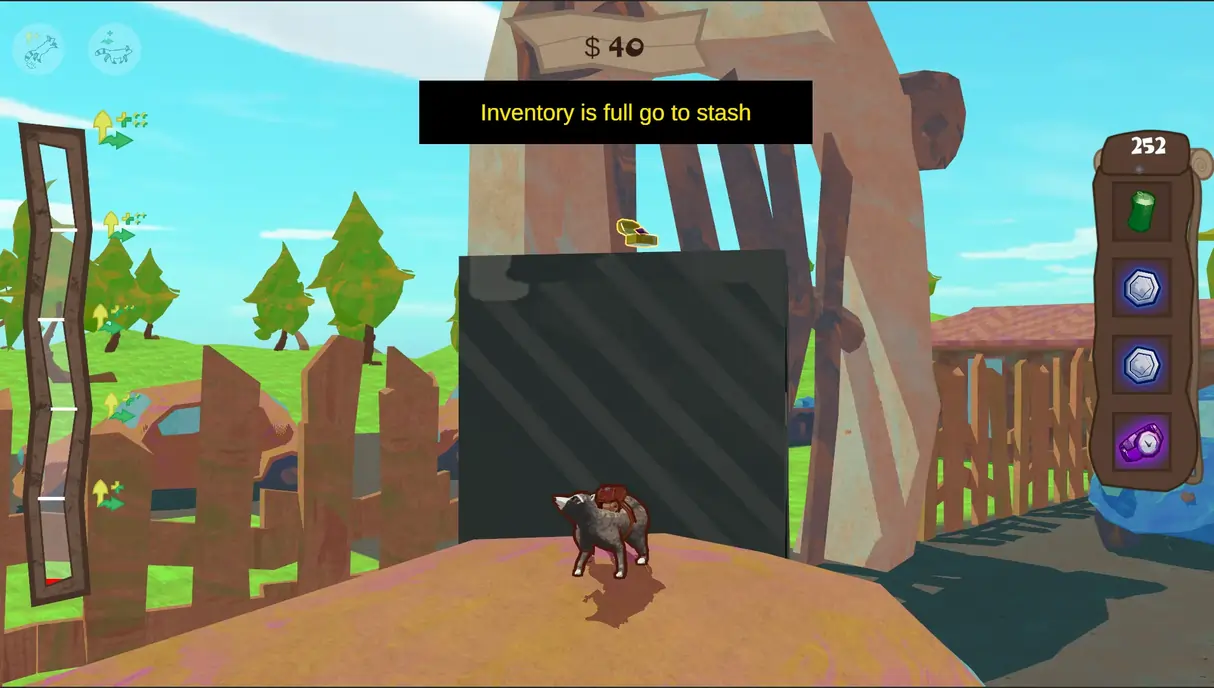
The In game UI uses a UI manager that takes and sends C# events when the appropriate gameplay event occurs. The inventory is updated every time an item gets picked up, adding the item to the inventory and updating the points counter. When reaching the raccoon stash the item points gets cashed in and gets added to the money UI.
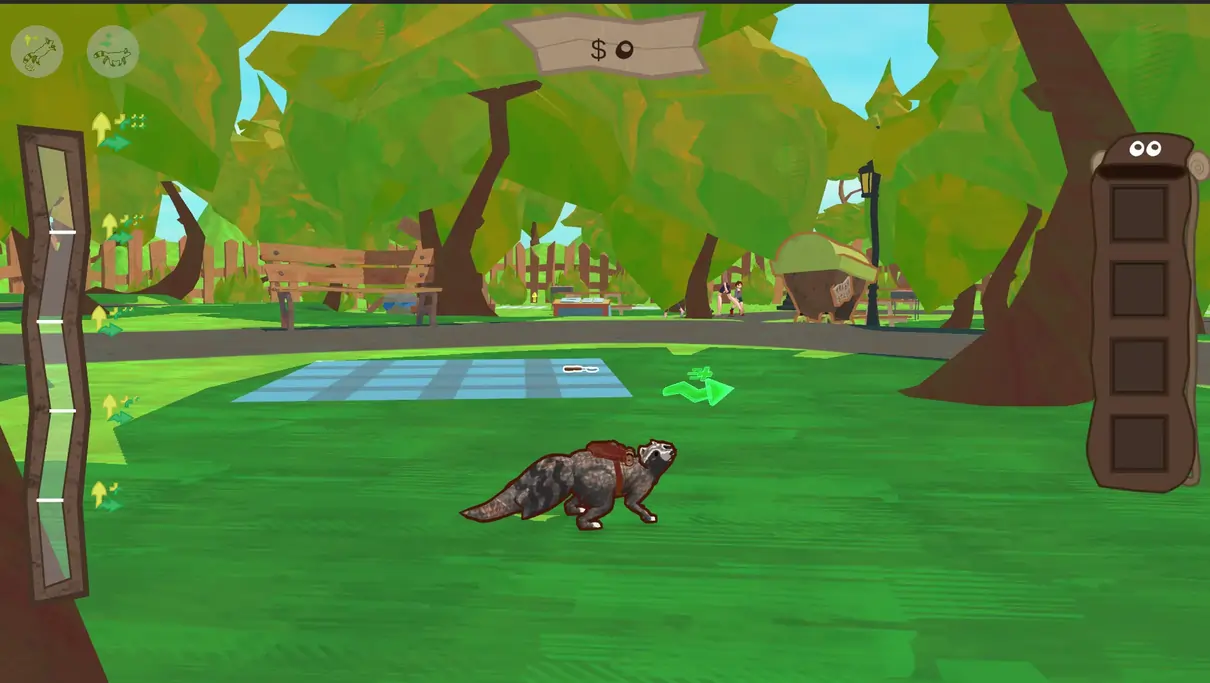
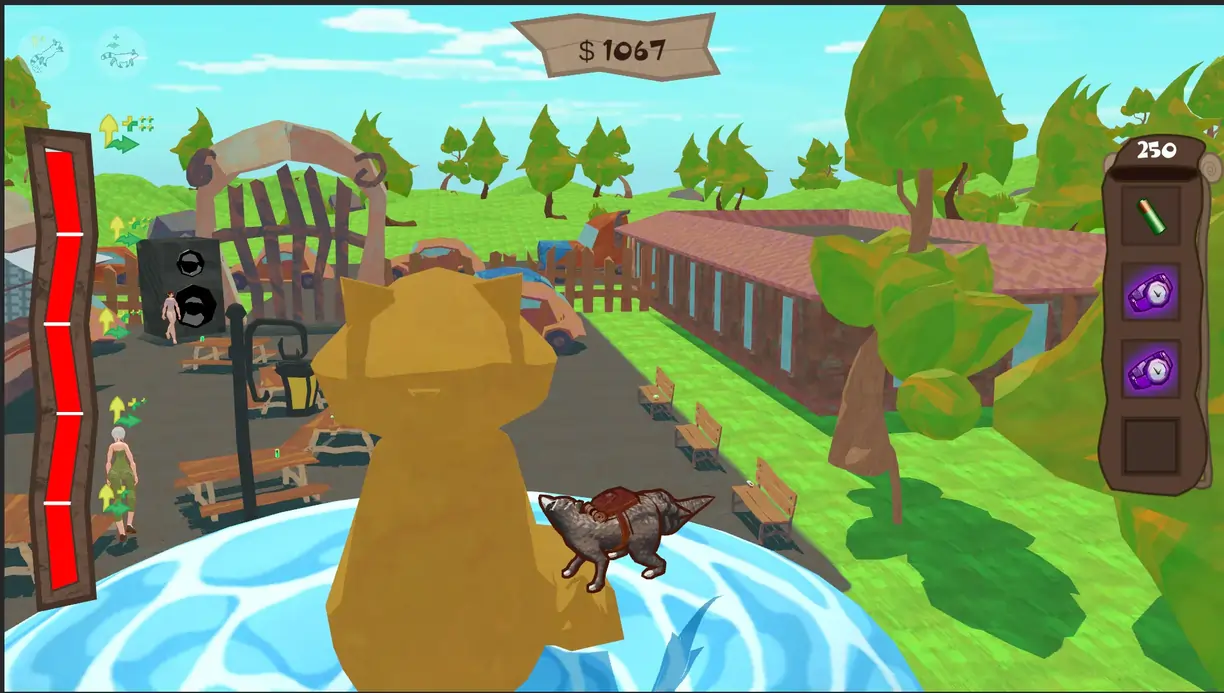
When chasing in the greed slider gets increased, when reaching a certain level of greed a buff gets added to the raccoon. The item in the inventory Ui reflects the rarity of the item having the same color.
When finishing a run the money that the player has gathered and gets saved, so it can be used in the skins menu. The player can purchase skins for the raccoons both for changing the color of the raccoon and having different hats.
When opening the game a save file gets loaded and read, I check if any skins are unlocked, if it is unlocked it sets a scriptable object that holds data of skins and hats to unlock, making it possible for the player to use it in game. When buying accessories the system unlocks the scriptable object, and writes to the save file saying the accessory in question is now unlocked.
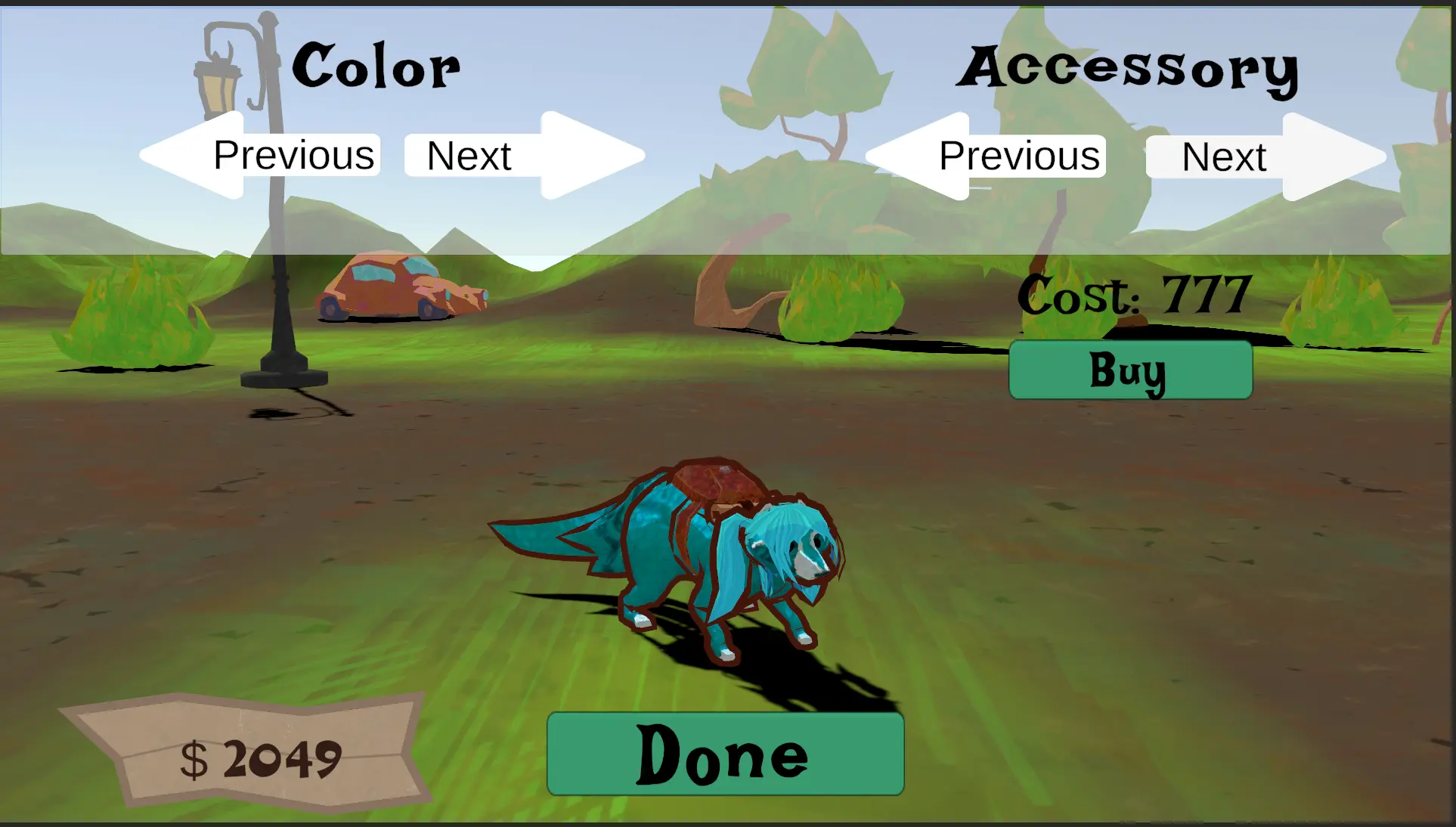
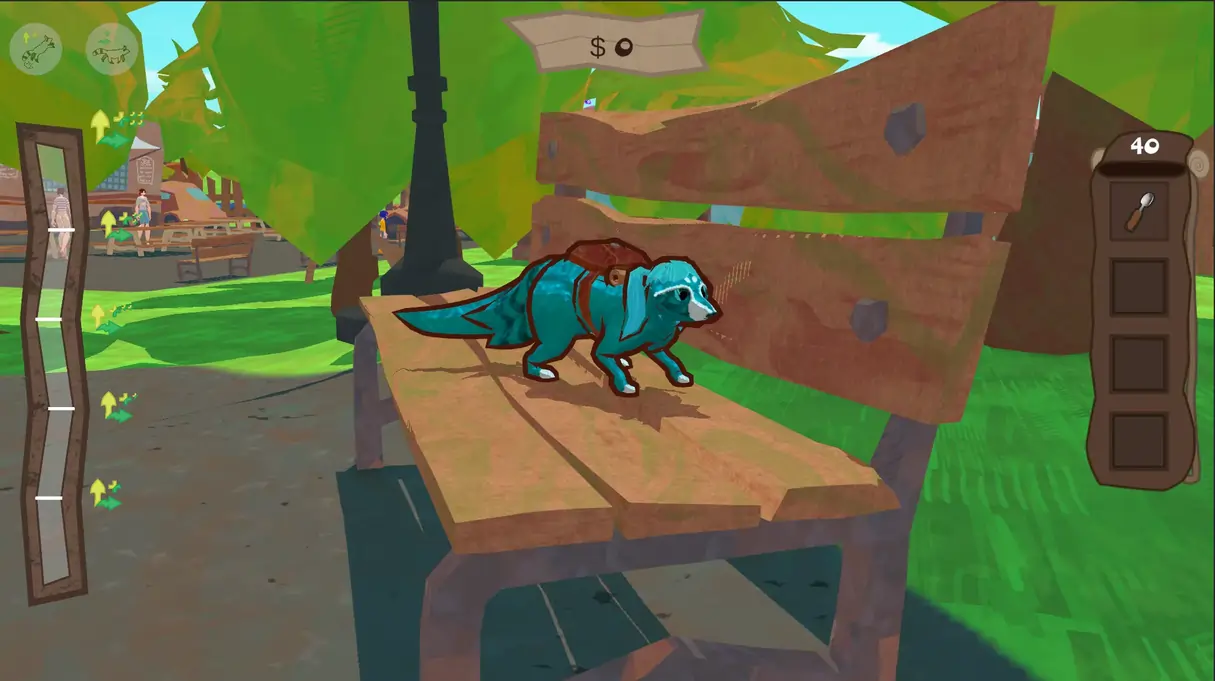
Whatever a skin or accessory is selected in the skins menu, it gets reflected in the game, changing into the chosen skin or accessory.
using System;
using System.Collections;
using System.Collections.Generic;
using TMPro;
using UnityEngine;
using UnityEngine.UI;

public class GreedSystem : MonoBehaviour
{
    public enum ActivityState
    {
        SystemOff,
        SystemOn,
        GreedPowerUp
    }

    public enum GreedState
    {
        StageOne,
        StageTwo,
        StageThree,
        StageFour,
        StageFive,
    }

    public event Action<float> OnGreedLevelUpdate;
    public event Action<float, float> OnGreedStart;


    // move to a ui manger
    [SerializeField] private AnimationCurve greedCurve;

    [SerializeField] private float minGreedLevel = 0, maxGreedLevel = 100;
    private float currentGreedLevel;

    [SerializeField] private float startingCurvePoint;
    private float currentCurvePoint;
    [Header("DONT BUT IT ON 0")]
    [SerializeField] private float curveBalancingValue = 1;

    private ActivityState gameState;
    [NonSerialized] public GreedState greedState;

    private void Start()
    {
        UiManger.Instance.OnAddToGreedLevel += UiManger_UpdateCurvePoint;
        StartCoroutine(WaitForConnection());
        currentCurvePoint = startingCurvePoint;
        gameState = ActivityState.SystemOn;
        GameManger.Instance.BuffsForGreedState(greedState);

    }

    private IEnumerator WaitForConnection()
    {
        yield return null;
        OnGreedStart?.Invoke(minGreedLevel, maxGreedLevel);
    }

    private void Update()
    {

        if (gameState == ActivityState.GreedPowerUp && !PowerUpSystem.Instance.GreedPowerUp.isActive)
        {
            gameState = ActivityState.SystemOn;
        }

        if (gameState == ActivityState.SystemOn)
        {
            if (PowerUpSystem.Instance.GreedPowerUp.isActive)
            {
                gameState = ActivityState.GreedPowerUp;
            }
            ObservingGreedState();

            ManagingGreedLevel();
            if (currentGreedLevel <= minGreedLevel)
            {
            }
        }
    }

    private void GameOver()
    {
        gameState = ActivityState.SystemOff;
    }

    private void ObservingGreedState()
    {
        GreedState tempGreedState = greedState;

        if (currentGreedLevel >= (maxGreedLevel / 5) * 4)
        {
            greedState = GreedState.StageFive;
        }
        else if (currentGreedLevel >= (maxGreedLevel / 5) * 3 && currentGreedLevel <= (maxGreedLevel / 5) * 4)
        {
            greedState = GreedState.StageFour;
        }
        else if (currentGreedLevel >= (maxGreedLevel / 5) * 2 && currentGreedLevel <= (maxGreedLevel / 5) * 3)
        {
            greedState = GreedState.StageThree;
        }
        else if (currentGreedLevel >= (maxGreedLevel / 5) * 1 && currentGreedLevel <= (maxGreedLevel / 5) * 2)
        {
            greedState = GreedState.StageTwo;
        }
        else
        {
            greedState = GreedState.StageOne;
        }

        if (greedState != tempGreedState)
        {
            GameManger.Instance.BuffsForGreedState(greedState);
        }

    }

    private void ManagingGreedLevel()
    {
        if (currentGreedLevel > 0)
        {
            currentGreedLevel -= greedCurve.Evaluate(currentCurvePoint) * Time.deltaTime;
            OnGreedLevelUpdate?.Invoke(currentGreedLevel);
        }
    }

    public void SuppressGreedLevel(float suppressionValue)
    {
        if (currentGreedLevel + suppressionValue > maxGreedLevel)
        {
            currentGreedLevel = maxGreedLevel;
        }
        else
        {
            currentGreedLevel += suppressionValue;
        }
    }
    private void UiManger_UpdateCurvePoint(int score)
    {
        SuppressGreedLevel(score);
        currentCurvePoint += score / curveBalancingValue;
    }
}using System;
using System.Collections;
using System.Collections.Generic;
using UnityEditor;
using UnityEngine;
public class UiManger : MonoBehaviour
{
public static UiManger Instance;
public event Action<int> OnScoreUpdate;
public event Action<int> OnAddToGreedLevel;
public event Action<float> OnGreedLevelUpdate;
public event Action<float, float> OnGreedStart;
public event Action<LootData> OnGettingLoot;
public event Action<List<LootData>> OnGettingLootToStash;
public event Action<int> OnUiChange;
public event Action OnInventoryFull;
public event Action OnInventoryClear;
private GreedSystem greedSystem;
private ScoreSystem scoreSystem;
private ItemsManager itemsManger;
private DetectHuman detectHuman;
private InventoryUIManager inventoryUIManager;
[SerializeField] private GameObject gameOverCanvas;
[SerializeField] private GameObject mainCanvas;
[SerializeField] private GameObject pauseCanvas;
[SerializeField] private GameObject ToStash;
[SerializeField] private GameObject ToStashBecon;
[SerializeField] private GameOverMenu gameOverMenu;
private int currentScore;
private void Awake()
{
if (Instance == null)
{
DontDestroyOnLoad(gameObject);
Instance = this;
}
greedSystem = FindFirstObjectByType<GreedSystem>();
scoreSystem = FindFirstObjectByType<ScoreSystem>();
itemsManger = FindFirstObjectByType<ItemsManager>();
detectHuman = FindFirstObjectByType<DetectHuman>();
inventoryUIManager = FindFirstObjectByType<InventoryUIManager>();
if (greedSystem == null || scoreSystem == null || itemsManger == null)
{
Debug.LogError("Greed, score or item system is not in the scene");
}
if (gameOverCanvas == null || mainCanvas == null)
{
Debug.LogError("Dose not have Game over or main canvas");
}
}
private void Start()
{
currentScore = 0;
GameManger.Instance.OnPauseGame += GameManger_PauseState;
scoreSystem.OnScoreIncrease += ScoreSystem_ScoreUpdate;
greedSystem.OnGreedStart += GreedSystem_OnStart;
greedSystem.OnGreedLevelUpdate += GreedSystem_GreedUpdate;
itemsManger.OnStashHasItems += ItemsManger_GivenItems;
itemsManger.OnInventoryFull += ItemManager_FullInventory;
itemsManger.OnStashHasItems += ItemManager_ClearInventory;
itemsManger.OnGettingLoot += ItemManager_GettingLoot;
itemsManger.OnMaxInventoryIncreased += ItemManger_ChangeToStash;
inventoryUIManager.OnUiChanged += InventoryUIManager_ChangedUi;
detectHuman.HumanDetected += DetectHumanOnHumanDetected;
}
private void DetectHumanOnHumanDetected()
{
mainCanvas.SetActive(false);
gameOverCanvas.SetActive(true);
GameManger.Instance.ChangeState(GameManger.GameState.GameOver);
gameOverMenu.SetEndValues(currentScore);
}
private void ScoreSystem_ScoreUpdate(int score)
{
DataManager.AddMoney(score);
currentScore += score;
if (currentScore > DataManager.MyPlayerData.HighScore)
{
DataManager.MyPlayerData.HighScore = currentScore;
}
OnAddToGreedLevel?.Invoke(score);
OnScoreUpdate?.Invoke(currentScore);
}
private void GreedSystem_OnStart(float minGreed, float maxGreed)
{
OnGreedStart?.Invoke(minGreed, maxGreed);
}
private void GreedSystem_GreedUpdate(float greedLevel)
{
OnGreedLevelUpdate?.Invoke(greedLevel);
}
private void ItemManager_ClearInventory(List<LootData> data)
{
foreach (LootData item in data)
{
DataManager.AddLootToData(item);
}
ToStash.SetActive(false);
ToStashBecon.SetActive(false);
OnInventoryClear?.Invoke();
}
private void ItemManager_FullInventory()
{
ToStash.SetActive(true);
ToStashBecon.SetActive(true);
OnInventoryFull?.Invoke();
}
private void ItemsManger_GivenItems(List<LootData> loot)
{
OnGettingLootToStash?.Invoke(loot);
}
private void ItemManager_GettingLoot(LootData lootData)
{
OnGettingLoot?.Invoke(lootData);
}
private void ItemManger_ChangeToStash()
{
ToStash.SetActive(false);
ToStashBecon.SetActive(false);
}
private void InventoryUIManager_ChangedUi(int maxInventory)
{
OnUiChange?.Invoke(maxInventory);
}
private void GameManger_PauseState(bool state)
{
mainCanvas.SetActive(!state);
pauseCanvas.SetActive(state);
}
}using System;
using System.Collections;
using System.Collections.Generic;
using System.ComponentModel;
using System.Net.Http.Headers;
using TMPro;
using Unity.Collections;
using Unity.VisualScripting;
using Unity.VisualScripting.Dependencies.Sqlite;
using UnityEngine;
using UnityEngine.SceneManagement;
public class CustomeChanger : MonoBehaviour
{
[SerializeField] private List<HatUnlock> hats = new();
[SerializeField] private List<SkinUnlock> raccoonSkins = new();
[SerializeField] private Renderer raccoonRenderer;
[SerializeField] private Transform hatHolder;
[SerializeField] private GameObject hatBuyUi;
[SerializeField] private TextMeshProUGUI hatCostUi;
[SerializeField] private GameObject skinBuyUi;
[SerializeField] private TextMeshProUGUI skinCostUi;
[SerializeField] private TextMeshProUGUI moneyUi;
private int hatIndex;
private int skinIndex;
private int nextScene;
public void Start()
{
if (raccoonRenderer == null)
{
Debug.LogError("No raccoon renderer!!!");
}
if (hatHolder == null)
{
Debug.LogError("No hat holder!!!");
}
if (DataManager.MyPlayerData.CurrentHatName == "")
{
DataManager.MyPlayerData.CurrentHatName = hats[0].name;
}
if (DataManager.MyPlayerData.CurrentSkinName == "")
{
DataManager.MyPlayerData.CurrentSkinName = raccoonSkins[0].name;
}
UpdateMoneyUi();
HatStart();
SkinStart();
}
private void UpdateMoneyUi()
{
moneyUi.text = "$ " + DataManager.MyPlayerData.CurrentMoney;
}
private void HatStart()
{
for (int i = 0; i < hats.Count; i++)
{
if (hats[i].name == DataManager.MyPlayerData.CurrentHatName)
{
hatIndex = i;
break;
}
}
Debug.Log(DataManager.MyPlayerData.CurrentHatName);
Debug.Log(hats[hatIndex].name);
if (hatHolder.childCount == 0)
{
Instantiate(hats[hatIndex].HatPrefab, hatHolder);
}
else
{
Destroy(hatHolder.GetChild(0).gameObject);
Instantiate(hats[hatIndex].HatPrefab, hatHolder);
}
}
private void SkinStart()
{
for (int i = 0; i < raccoonSkins.Count; i++)
{
if (raccoonSkins[i].name == DataManager.MyPlayerData.CurrentSkinName)
{
skinIndex = i;
break;
}
}
Debug.Log(DataManager.MyPlayerData.CurrentSkinName);
Debug.Log(raccoonSkins[skinIndex].name);
raccoonRenderer.material = raccoonSkins[skinIndex].RaccoonMaterial;
}
private void IsItemUnlocked(bool isUnlocked, int itemCost, ref GameObject buyButton, ref TextMeshProUGUI moneyText)
{
if (isUnlocked)
{
buyButton.SetActive(false);
moneyText.gameObject.SetActive(false);
}
else
{
buyButton.SetActive(true);
moneyText.gameObject.SetActive(true);
moneyText.text = "Cost: " + itemCost;
}
}
public void HatChange(int direction)
{
hatIndex += direction;
if (hatIndex >= hats.Count)
{
hatIndex = 0;
}
else if (hatIndex < 0)
{
hatIndex = hats.Count - 1;
}
IsItemUnlocked(DataManager.IsHatUnlocked(hats[hatIndex]), hats[hatIndex].Cost, ref hatBuyUi, ref hatCostUi);
if (hatHolder.childCount == 0)
{
Instantiate(hats[hatIndex].HatPrefab, hatHolder);
}
else
{
Destroy(hatHolder.GetChild(0).gameObject);
Instantiate(hats[hatIndex].HatPrefab, hatHolder);
}
}
public void SkinChange(int direction)
{
skinIndex += direction;
if (skinIndex >= raccoonSkins.Count)
{
skinIndex = 0;
}
else if (skinIndex < 0)
{
skinIndex = raccoonSkins.Count - 1;
}
IsItemUnlocked(DataManager.IsSkinUnlocked(raccoonSkins[skinIndex]), raccoonSkins[skinIndex].Cost, ref skinBuyUi, ref skinCostUi);
raccoonRenderer.material = raccoonSkins[skinIndex].RaccoonMaterial;
}
public void BuyHat()
{
if (DataManager.MyPlayerData.CurrentMoney >= hats[hatIndex].Cost)
{
DataManager.ChangeHatsUnlocked(hats[hatIndex], true);
IsItemUnlocked(DataManager.IsHatUnlocked(hats[hatIndex]), hats[hatIndex].Cost, ref hatBuyUi, ref hatCostUi);
DataManager.RemoveMoney(hats[hatIndex].Cost);
UpdateMoneyUi();
}
}
public void BuySkin()
{
if (DataManager.MyPlayerData.CurrentMoney >= raccoonSkins[skinIndex].Cost)
{
DataManager.ChangeSkinsUnlocked(raccoonSkins[skinIndex], true);
IsItemUnlocked(DataManager.IsSkinUnlocked(raccoonSkins[skinIndex]), raccoonSkins[skinIndex].Cost, ref skinBuyUi, ref skinCostUi);
DataManager.RemoveMoney(raccoonSkins[skinIndex].Cost);
UpdateMoneyUi();
}
}
public void SaveChanges()
{
if (DataManager.IsHatUnlocked(hats[hatIndex]))
{
DataManager.CurrentHat = hats[hatIndex];
DataManager.MyPlayerData.CurrentHatName = hats[hatIndex].name;
}
if (DataManager.IsSkinUnlocked(raccoonSkins[skinIndex]))
{
DataManager.CurrentSkin = raccoonSkins[skinIndex];
DataManager.MyPlayerData.CurrentSkinName = raccoonSkins[skinIndex].name;
}
SaveSystem.SavePlayerData();
}
private void ChangingScene(int sceneIndex)
{
nextScene = sceneIndex;
SaveSystem.IsSaved = false;
SaveChanges();
StartCoroutine(WaitForSaveData());
}
private IEnumerator WaitForSaveData()
{
while (!SaveSystem.IsSaved)
{
yield return null;
}
SceneManager.LoadScene(nextScene);
}
public void SceneLoad()
{
ChangingScene(1);
}
public void Back()
{
ChangingScene(0);
}
}What I learned
I got better at working in a team while using Unity, keeping a consistent code style and codebase, communicating on what I am working on to others so we don't work on the same thing at the same time, and using Unity's Perforce integration to minimise the risk of merge conflicts.
I learned how to use Perforce and Jira as this was the first time using these tools. Perforce took some time to get used to and work with, but I found the feature of seeing which files other people were working on super useful. Jira was easier to grasp being similar to tools like Trello, so I already had some experience working with these types of tools. I liked the function of ordering things by epics so it was easier to see how far along a feature was, and what was done inside of it.
I learned the importance of changing plans after feedback and changing systems to improve the gaming experience even if that means that part of my work never gets used. The original idea of the game was more stealth intensive but after some feedback we went for a more arcade, fast past gameplay. Because of the change I think the game became way more fun to play and a better product because of it. Listening to feedback and adapting the game when things are not working or feels good is super important and can impact the perception of the end product heavily.
I learned how to manage stress when there is a lot of work but not a lot of time, being able to work in dose conditions and still being able to plan how to divide my time so things get done. Focusing on the most important features and not wasting time on things that were nice to have but not important for the game.